

If you snore regularly, don’t ignore this warning sign. Our Las Vegas dental office can help you get tested and diagnosed with sleep apnea and then prescribe a treatment option that works for you. We provide our Las Vegas sleep apnea patients with oral appliances which are much more comfortable alternatives to CPAP. Please give our dentist office a call to schedule a consultation with sleep dentist Dr. Polley by calling (702) 873-0324 or emailing us today.
What Causes It?
You might wonder just what exactly causes snoring. Snoring occurs when your airway becomes narrow at night. It’s normal for your muscles and gravity to hold your airway open during the day and then at night when you lie down to sleep, gravity no longer pulls open your airway. When you fall asleep and your muscles relax, your airway narrows.
After your airway narrows, airflow becomes more restricted and turbulent, creating vibrations that we hear as snoring. Snoring is a result of many different factors including jaw position, the anatomy of your airway, lifestyle factors, sleeping position, weight, and more.
Is My Snoring Sleep Apnea?
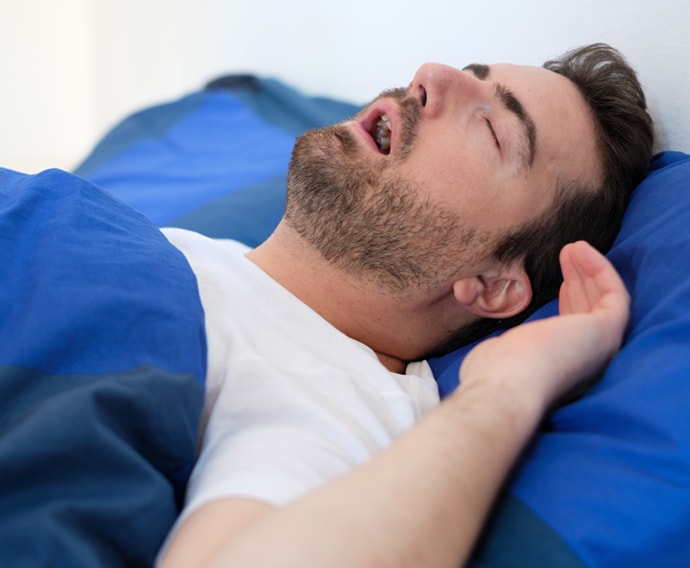
There’s a big difference between snoring at night and snoring with sleep apnea. Sleep apnea doesn’t occur just because your airway is narrow. Sleep apnea occurs when your airway cuts of oxygen completely, causing your brain to wake up to catch your breath. This process happens repeatedly throughout the night, causing your brain to not reach the restorative stages of sleep. It also causes your heart to work harder to keep you breathing and as a result, increases your risk of stroke, high blood pressure, and other health conditions.
Those who have sleep apnea generally wake up over a hundred times a night without knowing it. Usually, they don’t know they make choking noises throughout the night until a sleeping partner brings it to their attention. Fortunately, there are other sleep apnea symptoms to watch out for that don’t require someone to watch you sleep. These include:
- Daytime sleepiness
- Morning headaches
- Difficulty concentrating
- Lack of motivation
- Memory problems
- Diagnosis of type 2 diabetes
- High blood pressure
- Heart disease
- Waking up feeling unrested
- Mood changes
- Difficulty losing weight
If you suspect you have sleep apnea, it’s important to seek treatment as soon as possible. In severe cases of sleep apnea, studies suggest these patients have a short-term mortality risk five times greater than those without sleep apnea.
Comfortable Snoring and Sleep Apnea Treatments
Treating your sleep apnea is important to reduce your health risks and help you get a better night of sleep. At our Las Vegas dental office, we treat sleep apnea and snoring by prescribing an oral appliance. You wear the oral appliance every night and it resembles a nightguard.
The oral appliance repositions your jaw forward so that it can hold your airway open at night. Usually, your airway tissues hang off your jaw and cause obstruction but when you wear an oral appliance, it fixes your jaw’s position so the tissue doesn’t hang. When wearing the oral appliance, you can reduce or eliminate the severity of your sleep apnea or snoring.
If a doctor has diagnosed you with sleep apnea, you dislike using CPAP, suspect you have sleep apnea or have an interest in using an oral appliance, please call our sleep dentist in Las Vegas, Dr. Polley at (702) 873-0324 to schedule an appointment.
How Effective Is Oral Appliance Therapy Compared To CPAP?
Oral appliance therapy is generally effective for mild to moderate cases of sleep apnea. It’s often preferred by patients who find CPAP uncomfortable, though CPAP may be more effective for severe sleep apnea cases.
Is Oral Appliance Therapy Suitable For All Types Of Sleep Apnea?
Oral appliances are most effective for mild to moderate obstructive sleep apnea. They may not be as effective for severe cases, and a CPAP machine or other treatments may be recommended instead.
What Should I Do If I Can’t Tolerate CPAP Or If Oral Appliances Don’t Work?
If you can’t tolerate CPAP or oral appliances aren’t effective, other options include surgery, such as a uvulopalatopharyngoplasty (UPPP), or the use of a BiPAP machine. Your dentist will refer you to a sleep specialist to explore further treatments.
Are There Any Side Effects From Using An Oral Appliance For Sleep Apnea?
Some common side effects include jaw discomfort, dry mouth, or a slight feeling of tightness in the teeth. These side effects are usually temporary and can be managed by adjusting the appliance.
How Long Will I Need To Wear The Oral Appliance Each Night?
The oral appliance should be worn every night to maintain its effectiveness in keeping your airway open. Consistent use is essential for long-term relief from snoring and sleep apnea symptoms.
How Do I Know If An Oral Appliance Will Work For Me?
A dentist will evaluate your specific sleep apnea condition through a consultation and possibly a sleep study. Based on the severity of your sleep apnea and your personal needs, they will recommend whether an oral appliance is a suitable treatment option.
Can An Oral Appliance Cure Sleep Apnea?
While oral appliances can significantly reduce symptoms of sleep apnea, they are not a cure. They help manage the condition by keeping the airway open during sleep.
How Long Does It Take To Get Used To Wearing An Oral Appliance?
Most patients adapt to wearing an oral appliance within a few days to a couple of weeks. Some initial discomfort is normal, but it typically decreases as you adjust.
Will The Oral Appliance Cause Permanent Changes To My Teeth Or Jaw?
The oral appliance is designed to be safe and non-invasive. However, in some cases, prolonged use can cause slight changes in tooth position or jaw alignment, though these are generally minor.